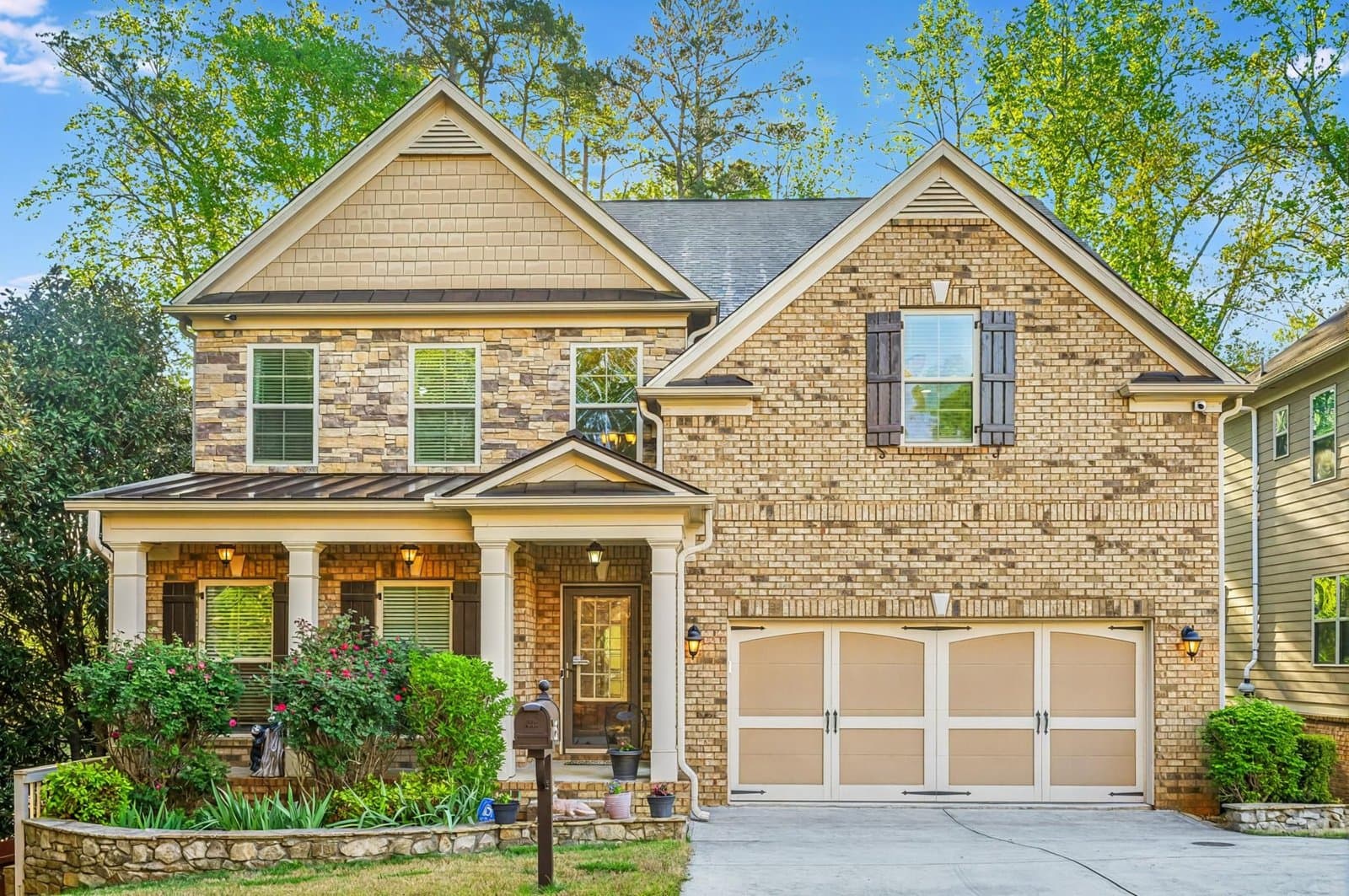

Most 1990s suburban Atlanta homes were built with 12×14 primary bedrooms, a single 5×8 hall bath shared with two secondary bedrooms, and closets sized for four hanging shirts. That layout killed buyer interest in 2019 and it kills buyer interest now. The bones are fine (stick framing, truss roofs, poured slabs) but the spatial program reads like a rental property, not a primary residence. Beckett Real Estate has walked 40+ of these homes in Fayette and Coweta counties in the past eighteen months, and the pattern is identical: buyers tour the kitchen, nod at the great room, then flinch when they see the primary suite and mentally dock $30,000 from their offer.
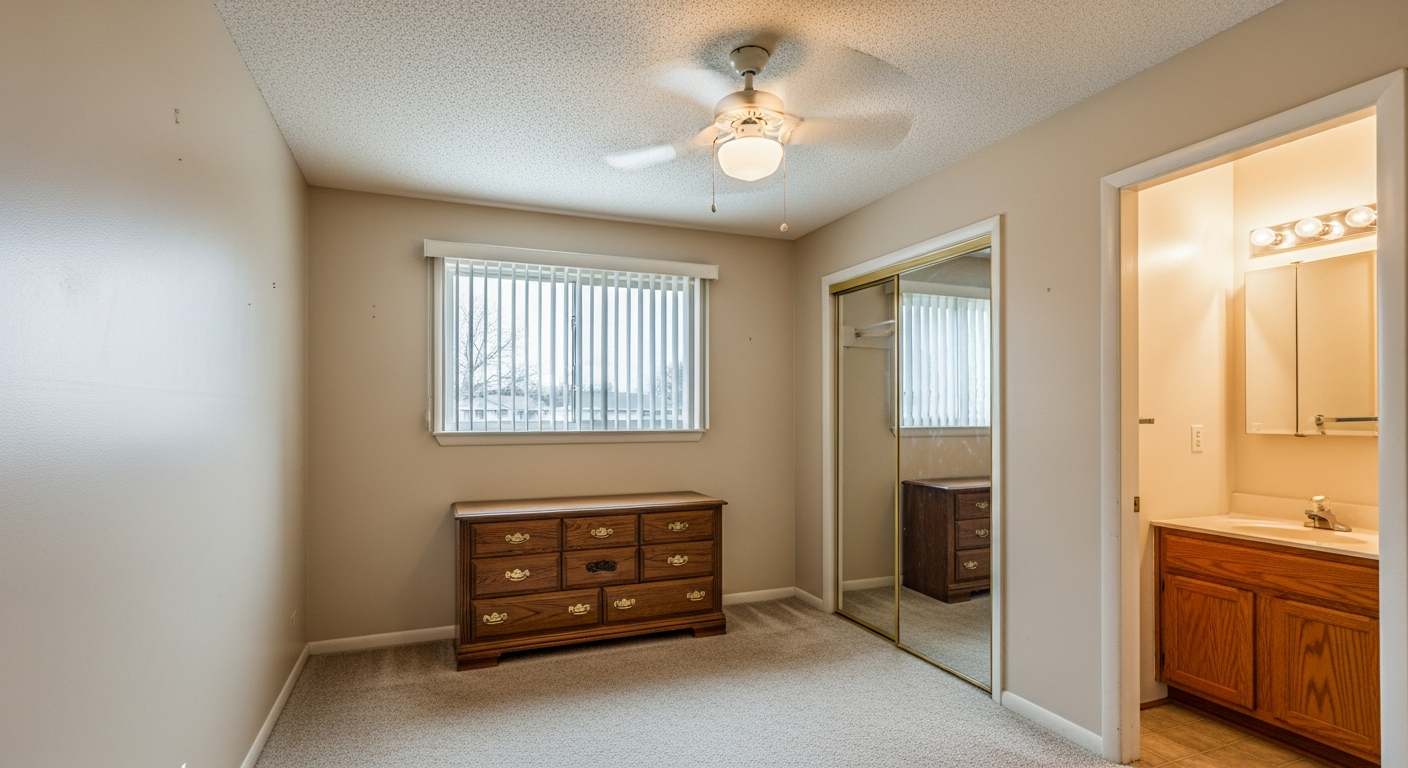
What we're working with: the cramped 1990s primary bedroom
The existing bedroom measures 12 feet by 14 feet with an 8-foot ceiling, builder-grade carpet over OSB subfloor, and two narrow double-hung windows on the rear elevation. The closet is a 4×6 reach-in with wire shelving and a single rod. There is no en-suite bath: the homeowner shares a hall bath with a fiberglass tub/shower combo, cultured marble vanity top, and contractor-white walls. Structurally, the exterior walls are 2×4 framing at 16 inches on center, the roof is a standard truss system, and the HVAC is a 3-ton unit serving 1,800 square feet. The layout works fine for a 1996 spec home, but it reads catastrophically small to a 2026 buyer expecting a soaking tub, dual vanities, and a walk-in closet with organization systems.
What's actually fine: the existing floor joists (2×10 at 16 inches on center) can support a cantilevered addition if the engineer signs off, the roof truss system has adequate overhang for a tie-in, and the electrical panel has six open breaker slots. What's killing value: the spatial hierarchy. The primary bedroom is smaller than the great room, the closet is smaller than the laundry room, and the bathroom situation signals (accurately or not) that this is a starter home, not a long-term residence. Buyers will pay $420,000 for a house with a dated kitchen and granite countertops, but they won't pay $420,000 for a house where the primary suite feels like a college apartment.
Style direction: Modern Transitional Suite
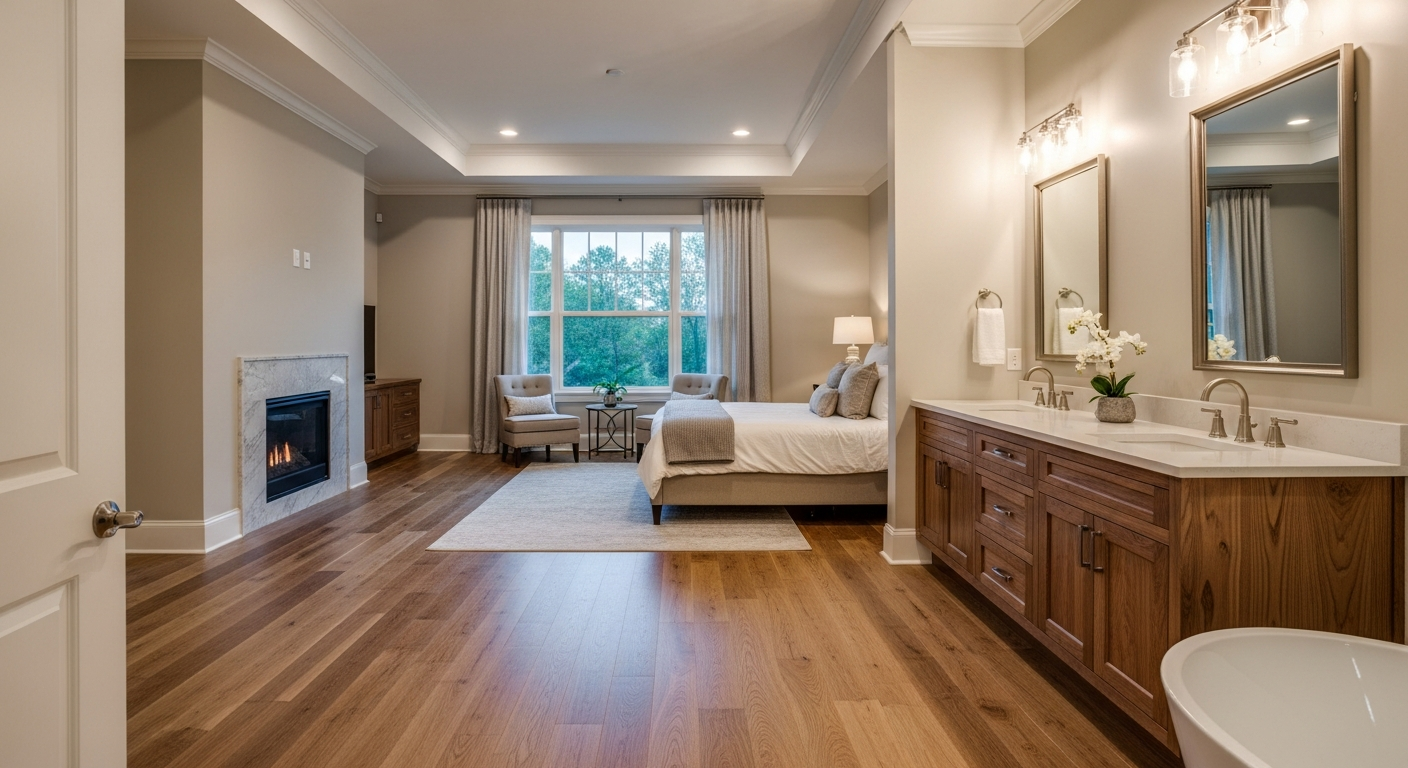
The redesign adds 350 square feet: 240 for the bedroom expansion and seating area, 110 for the new en-suite bath. The bedroom gets 9-foot ceilings with a tray detail over the bed wall (8 inches deep, painted the same color as the ceiling to avoid the 2004 faux-luxury look), wide-plank engineered hardwood in a 7-inch width (color: natural oak with a matte finish, no hand-scraping), and a seating area with two upholstered chairs flanking a tripod floor lamp. The walk-in closet runs along three walls with floor-to-ceiling built-ins: upper rods at 82 inches, lower rods at 40 inches, pull-out shoe racks, and velvet-lined jewelry drawers. Lighting is recessed 4-inch LEDs on dimmers plus two brass dome sconces flanking the bed wall. No chandeliers, no ceiling fans, no pendant lights over the nightstands: those read as trying too hard.
The primary bath centers on a freestanding soaking tub (67 inches long, matte white acrylic, floor-mounted tub filler in polished nickel) positioned under a picture window with privacy glass. The double vanity is walnut (not stained oak, not espresso) with a floating mount, honed quartz top in a warm white, and undermount sinks. The frameless walk-in shower runs 60 inches wide with a linear drain, marble subway tile (3×6, laid in a running bond) to the 9-foot ceiling, a fixed rain head, and a handheld wand. Fixtures throughout are polished nickel: not brushed, not oil-rubbed bronze, not matte black. Flooring is 12×24 porcelain tile in a light gray with a matte finish and rectified edges. The toilet is a wall-hung Duravit (not a floor-mount Kohler) to simplify cleaning. Total aesthetic: quiet, expensive, no decorative tile borders or accent walls.
Cost breakdown: Atlanta MSA, mid-2026
| Line Item | Cost |
|---|---|
| Foundation (continuous footing + slab OR cantilevered second-story framing) | $11,500 |
| Framing (walls, floor system, roof tie-in) | $13,200 |
| Roofing + flashing (tie into existing roof line) | $5,800 |
| Windows (4 double-hung + 1 picture window) | $4,800 |
| Exterior siding to match house (HardiePlank or brick veneer) | $6,200 |
| HVAC zone addition (mini-split OR extend main system) | $5,800 |
| Electrical (full circuit additions, recessed lights, switches, outlets) | $5,400 |
| Plumbing rough-in for primary bath (waste + supply) | $6,800 |
| Insulation (R-19 walls, R-30 ceiling) | $3,200 |
| Drywall + paint | $5,800 |
| Flooring (engineered hardwood, 350 sq ft installed) | $4,200 |
| Permit + structural engineering + contractor markup + 10% contingency | $11,300 |
| TOTAL | $84,000 |
Beckett Real Estate's construction-eye notes
What to KEEP: If the addition cantilevers from a second story, the existing floor joists stay (provided the structural engineer confirms load capacity for an additional 400 pounds per square foot live load plus dead load). If the addition is grade-level, keep the existing exterior wall framing and use it as the interior separation wall between old and new spaces. The existing HVAC system stays if it's a 3-ton or larger unit serving fewer than 1,800 square feet — adding 350 square feet requires roughly 1,400 BTUs per hour of cooling capacity, which most systems can handle with a dampered zone addition. First-floor ceiling joists stay if they're 2×10 or larger and the span is under 14 feet; anything smaller requires sistering or LVL reinforcement before framing above.
What to GUT: The original primary bedroom's exterior wall comes down to create one continuous 26×14 space (the old 12×14 bedroom plus the new 14×14 addition). The old hall bath gets gutted entirely: the fiberglass tub, the cultured marble vanity, the vinyl floor, the drywall. If the homeowner wants to keep a secondary bath, relocate the toilet and vanity to the old linen closet and frame a new 5×8 powder room. If not, the entire room becomes conditioned storage or gets absorbed into the adjacent secondary bedroom. Either way, the old bath's plumbing stack stays active (it's load-bearing in the wall cavity) but the fixtures go.
What's the TRAP: Undersizing the HVAC return for the added square footage. Most contractors extend the supply ducts but forget to add a return grille in the new space, which creates negative pressure in the addition and positive pressure in the rest of the house. The result: the water heater back-drafts, the addition never cools below 74°F, and the homeowner calls an HVAC tech six months later to retrofit a return for $2,800. Second trap: cantilevering more than 24 inches off the existing foundation without engineered LVL beams. Stick-framing 2×10 joists works for 18-inch overhangs; anything beyond that requires a flush beam or the floor will bounce. Third trap: framing for an 8-foot ceiling when 9-foot ceilings cost an additional $2,000 in framing and drywall but read twice as luxurious. Fourth trap: not roughing in plumbing for the freestanding tub filler during the initial build. Retrofit costs are four times higher because the plumber has to cut through the finished floor, run the supply lines under the slab, and patch the tile. Fifth trap: skipping the 240V circuit for a heated bathroom floor. Every homeowner who skips it regrets it within the first winter, and retrofitting means tearing up the brand-new tile and re-waterproofing the subfloor.
Home value impact
Remodeling Magazine's 2024 Cost vs. Value report for the Atlanta MSA shows that a mid-range primary suite addition recoups roughly 60% at resale. An $84,000 addition returns approximately $50,400 in added home value, a $33,600 loss on paper. But the math misses the bigger picture: without the addition, the house sells for $385,000 to a buyer with two kids and a $400,000 cap. With the addition, the house sells for $435,000 to a buyer with no kids, a $450,000 cap, and zero interest in a hall-bath-sharing floor plan. The suite doesn't add $84,000 in value, but it moves the house into a different buyer tier, and that tier writes higher offers, closes faster, and submits fewer inspection objections. The recoup percentage is irrelevant if the alternative is sitting on market for 90 days with three price cuts.
For an honest opinion and a realistic evaluation, contact Beckett Real Estate. Call Evan now: 866-578-8917 or schedule a free consultation.
Thinking about a move?
Beckett Real Estate works the whole of Metro Atlanta. Tell me the address or the neighborhood and I will tell you what the house is really like, what the inspection usually finds, and what the number should be.
Estimate your renovation costSearch homes for saleTalk to an agent nowMore articles like this